Two-Day Dumbbell Workout: A Practical Home Plan
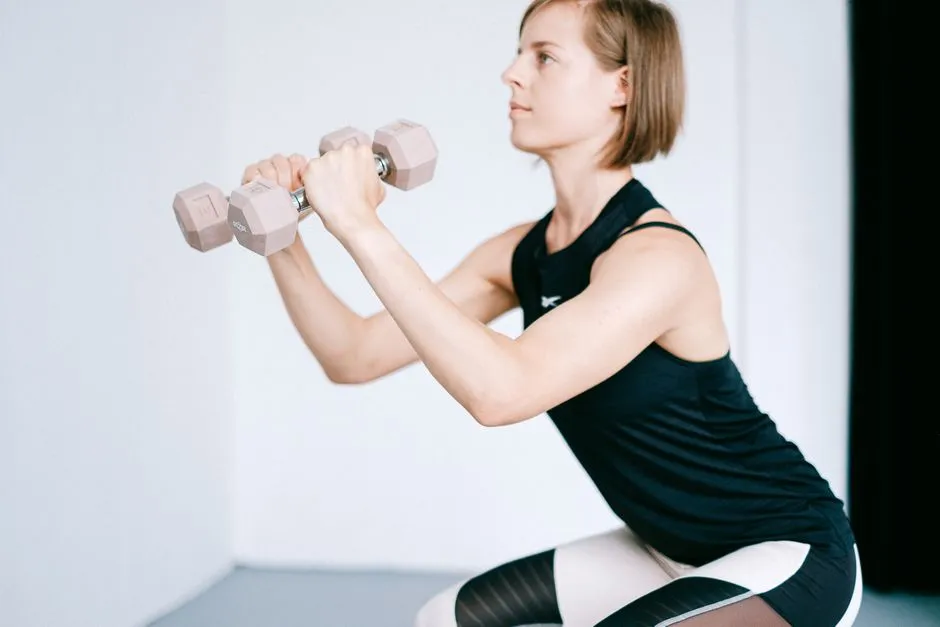
- How can you train at home with dumbbells twice a week?
- What should you check before starting?
- What do the two sessions contain?
- How do you prepare and pace the session?
- How do you perform the five movements?
- What if your only pair is the wrong weight?
- How do you decide what to repeat next time?
- Which symptoms require urgent help?
- Sources
How can you train at home with dumbbells twice a week?
Use two separated sessions built around a squat, hip hinge, row, floor chest press and shoulder press. Choose resistance for each exercise, not one weight that you force through everything. Learn unfamiliar movements with a qualified trainer. This is general adult exercise guidance, not rehabilitation. Stop for pain and consult a doctor or physiotherapist. In the UK, severe difficulty breathing, a tight or heavy chest, or sudden confusion needs 999 or A&E immediately.
This is a desk-researched layout assembled from the instructions below, not a tested programme or a personalised prescription. It needs no bench, cable machine or band anchor. It does need suitable dumbbells, clear space and movements you can control. Owning one pair does not establish that the pair fits every row.
What should you check before starting?
Mayo Clinic's strength-training guidance recommends talking with a healthcare professional before starting if you have a chronic condition or safety concerns. For unfamiliar lifting, get qualified instruction rather than using written cues as a substitute for having your technique checked.
Make a small equipment record: fixed or adjustable dumbbells, weight per hand, the manufacturer's setup instructions and where each movement will happen. Follow those instructions for adjustment and secure assembly. Do not improvise extra attachments to make a fixed dumbbell heavier. Keep the floor and overhead movement area clear.
Our suggested room check happens before the session: identify the standing area, the floor-press area and where you will put the weights down. Move the phone or printed plan where you can read it between exercises. Do not hold a weight while scrolling for the next instruction.
What do the two sessions contain?
Use the same five movements on both days. In this introductory layout, changing the weekday does not require changing the exercises. Repeating the setup also makes the next log entry easier to interpret.
| Slot | Day A | Day B |
|---|---|---|
| Squat | Dumbbells held at the sides | Repeat the same version |
| Hip hinge | Dumbbell Romanian deadlift | Repeat the same version |
| Pull | Dumbbell bent-over row | Repeat the same version |
| Chest push | Dumbbell chest press on the floor | Repeat the same version |
| Shoulder push | Standing dumbbell shoulder press | Repeat the same version |
The selection covers lower-body work, pushing and pulling. The standing row and shoulder press also require trunk control. It is an introductory selection, not a claim that five exercises answer every training goal.
For example, use Monday and Thursday. Mayo advises a full day of rest between training the same muscle group. Its general starting guidance is one set of 12–15 repetitions with suitable resistance. A set is a group of repetitions. Here, that means one work set at each of the five slots, not five circuits.
The two-day scheduling guide discusses the calendar separately. Treat this home layout as your chosen programme, not another complete workout to append to an existing plan.
How do you prepare and pace the session?
Mayo's technique guide recommends 5–10 minutes of walking or other aerobic activity before lifting and about one minute of rest between exercises. Move under control and breathe: out while lifting, in while lowering. Lower the weight or repetition count if form fails. Stop an exercise that causes pain.
The clock is not a command to begin the next lift before you can set up properly. This is not a timed circuit. Leave enough room in your appointment for preparation, exercise changes and recording what actually happened.
How do you perform the five movements?
Squat with the weights at your sides
Following Mayo's dumbbell squat, hold a weight in each hand with arms hanging down and feet about shoulder-width apart. Tighten the abdomen and bend through the hips, knees and ankles while keeping the spine stable. Return slowly.
This particular demonstration keeps knees centred over the feet, not ahead of the toes, and limits knee bend to 90 degrees. Those are the boundaries of the version described here, not a test of how deeply everyone must squat. If the standard version is difficult, Mayo describes putting down the weights and using a chair-assisted squat. Get help selecting an appropriate version rather than forcing the loaded one.
Romanian deadlift: move at the hips
NASM's dumbbell Romanian deadlift is a hip-hinge exercise, classified as intermediate. Learn the hinge with a trainer before including it. Stand hip-width apart, holding the weights with a neutral grip. Brace, keep a slight knee bend and push the hips backward while maintaining a neutral spine.
Lower only while that position remains controlled, then drive the hips forward to return upright without leaning back. NASM prioritises spinal alignment over maximum depth. Do not round the lower back to reach the floor, bend the knees progressively into a squat or use momentum. If you cannot maintain the hinge, this slot needs coaching and a suitable alternative before following the complete layout.
Bent-over row: hold the torso still
PureGym's row instructions start with a hip hinge and a neutral spine. Use a neutral grip, with palms facing each other. With the abdomen braced, draw the elbows backward and bring the weights toward the hips. Lower them slowly as the arms straighten.
The movement is a row while holding the hinged position, not repeatedly standing up to lift the weights. PureGym advises mastering an unweighted hinge first. If holding that position is the limiting problem, ask a trainer about a supported alternative. That would change the equipment requirements of this particular plan.
Chest press: use the floor version
Mayo's chest-press instructions explicitly allow lying on the floor. Lie on your back with a dumbbell in each hand, upper arms perpendicular to the body and forearms upright. Press slowly until the elbows are almost straight, then lower under control.
Keep the head relaxed and neutral. Do not lock the elbows, drive with the feet or let the elbows move below the body's horizontal line. The floor does not make an unsuitable weight suitable. Ask a trainer to show you how to enter and leave the position with your actual dumbbells before doing it alone.
Shoulder press: keep the body stable
PureGym's standing shoulder press uses a shoulder-width stance, neutral hips and spine, and weights between shoulder and ear height with palms forward. Engage the abdomen and glutes, press overhead and lower slowly while keeping the feet flat and torso stable.
Choose a load that permits the movement without changing body position to complete it. PureGym recommends positioning the arms slightly in front of the body rather than directly out beside the head. Pain is a stop signal, not a reason to search for a different overhead angle yourself.
What if your only pair is the wrong weight?
Audit each exercise separately. Write the load per hand beside its name. A single entry at the top of the page can hide the fact that one movement is manageable and another is not.
Use this original decision record:
| What happened | What to record or resolve |
|---|---|
| Setup was unfamiliar | Arrange instruction before repeating it |
| The pair did not fit one movement | Identify that movement before borrowing or buying equipment |
| A lighter option was used | Record the actual load and exercise version |
| An exercise was omitted | Leave an explicit gap rather than marking the session complete |
Mayo advises gradually increasing resistance when additional repetitions become easy. If your fixed pair provides no suitable next step, discuss equipment or exercise options with a qualified trainer. Do not assume that adding many sets, rushing rests or changing several variables is an equivalent replacement.
How do you decide what to repeat next time?
Keep the log small: exercise, load per hand, repetitions completed and one useful setup note. Compare the same version with itself. “Twelve repetitions” means little if the grip, exercise or load changed without being recorded.
Our training-skills section covers programme reading. At your next review, identify what stayed repeatable and which unresolved item needs help. There is no required weekly increase or promised transformation date. The starter-plans section can help you compare programme formats without combining them all.
Which symptoms require urgent help?
Stop for pain and seek medical or physiotherapy advice rather than diagnosing it through exercise substitutions. This plan does not cover rehabilitation.
The NHS emergency guidance lists severe breathing difficulty, a tight or heavy chest and sudden confusion among signs requiring 999 or A&E immediately in the UK. Do not drive yourself. These are selected signs, not the complete list. Do not wait for a trainer's reply.